Live Talk: Prof. John Parker

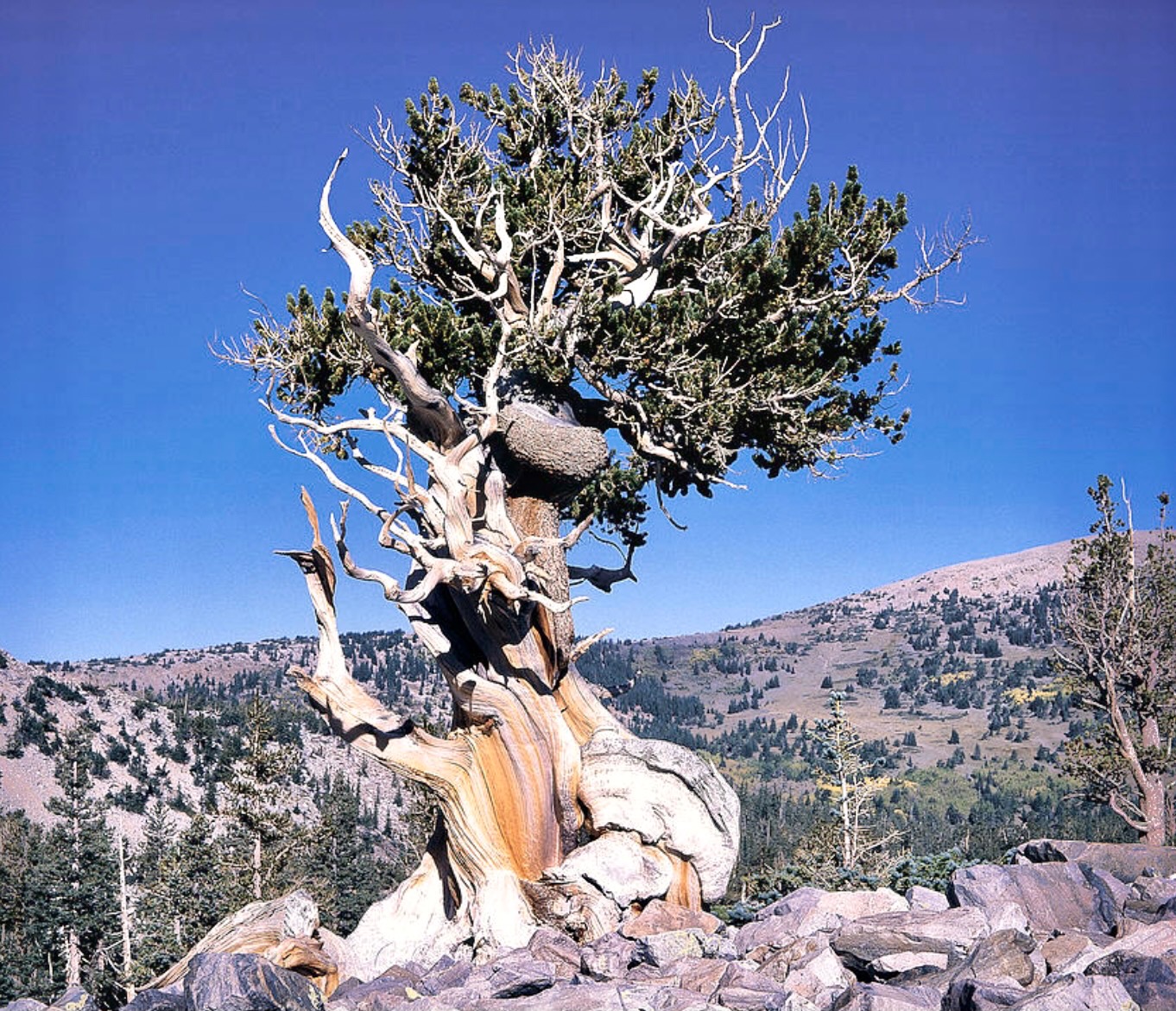
Prof. John Parker will talk about the bristlecone pine and other trees following coffee and a book sale.

Thursday 13 February 2025
This event has now passed

Title Trees today: increasing delight, increasing despair.

Abstract As well as being an expert on John Stevens Henslow, founder of the new Cambridge University Botanic Garden, John Parker has had a passion for trees throughout his professional life. Now that he is retired in Norfolk, John has become an avid gardener of 35 tree species and more than 150 woody shrubs, though these are mere striplings compared to the 5,000-year-old bristlecone pine that is the oldest living organism. Trees have had an impact not only on John, but they have also had an amazing impact on the global environment and, in this talk, John will review the role of trees and assess their future in a world that breached the 1.5°C global warming target in 2024.

Our Speaker Prof. John Parker studied botany at Oxford and, following a Readership at Queen Mary College London and a spell heading the Reading University Botany Department, was Director of CU Botanic Garden from 1996 to 2010. At Cambridge, John was also Curator of the University Herbarium and Professor of Plant Cytogenetics, with research interests in evolutionary genetics. A Fellow of Clare Hall, he established the Genetics Garden in 1998 and oversaw the planning of the Sainsbury Laboratory which was officially opened in 2011. John is a long-standing member of CGT and, indeed, a patron, so we are delighted to welcome him back.

Location The Village Hall, 56 High Street, Coton CB23 7PL. For Google map directions, please click here.

This live talk is open to members of Cambridgeshire Gardens Trust (£8) and guests (£10). Doors will open at 11:00am for coffee and a sale of books generously provided by CGT member Marguerite Sassoon; proceeds to go to CGT activities. The talk will start at approximately 11:30am. Our preferred method of booking is by BACS transfer to our new bank account in the name of Cambridgeshire Gardens Trust (sort code 30-99-50, account number 80635768) using your name as reference; please confirm payment by email to admin. Cheques, payable to Cambridgeshire Gardens Trust, may be sent to Judith Christie, Teal Cottage, Fen Drayton CB24 4SH.

Live Talk: Dr Gin Warren

Jane Webb was later Mrs John Loudon. This is a new edition by Naperville: Poisoned Pen Press, an imprint of Sourcebooks, 2022. First edition: anonymous,  London: Henry Colburn, 1827 and thereby hangs a tale. Colburn’s second edition credited Jane Webb as the author.

This event has now passed

Title Meet the Book Manufactory of Bayswater!

Abstract Garden historians know of John Claudius Loudon as a man with a phenomenal output. He’s credited with 60 million words on horticulture, agriculture and architecture by the 1986 edition of The Oxford Companion to Gardens. And this a man with one arm amputated and the other contracted to all but uselessness by the long-term consequences of rheumatic fever! The explanation is that as well as being hugely hardworking himself he was also – as conventional in the early 19C – the front man for a family business. John, Jane, Jane and Mary lived, along with Agnes and Agnes (though they weren’t alive simultaneously), in a prototype semi-detached villa of their own design. The mezzanine verandah connected the two homes to the publishing office in the extension at the back, and there was a plantspersons’ garden.

Come and hear about the ‘Book Manufactory’s’ combined skills in landscape design, farming, architecture, editing, writing fiction and non-fiction, translating from continental European languages, botanical, horticultural and engineering drawing, wood engraving, commerce, networking and socialising across the era’s rigid social class system.

Our Speaker Gin is building on her garden history diploma from the Royal Botanic Garden Edinburgh, and has recently completed a Cambridge master’s degree in history. Her dissertation focussed on some of the social and political aspects of the Loudon family’s work as shown by The Gardener’s Magazine which they published from 1826 to 1843. Gin is now embarking on a PhD which will expand on this topic and get into the gender history aspects of The Book Manufactory of Bayswater. Outside of research, Gin enjoys golden age detective fiction, crewel wool embroidery, observing nature while walking her dog, and being an active grandmother. In earlier life, she qualified as a doctor at Addenbrooke’s and worked there and at the West Suffolk Hospital before doing higher specialist training and working as a Public Health physician. 

Venue and time Hilton Village Hall PE28 9PF. The talk will start at 2:30pm and will be broadcast simultaneously on Zoom (see below).

Bookings £6 for members of CGT and the Plant Heritage Society / £7 for guests, payable by BACS please and email admin (in-person). For this event, we are trialling simultaneous broadcasting on Zoom, also at £6, so if you would like to join the live-stream, please email admin (for Zoom) for Zoom joining details.

Garden Tour and Social Event: Abbots Ripton Hall

Summer comes to Abbots Ripton gardens. Photo courtesy Historic Houses Association.

This event has now passed
By kind permission of Lord and Lady De Ramsey

Abbots Ripton Hall is a late 18C/ early 19C country house, set in eight acres of garden, including herbaceous borders, an old-fashioned rose circle, a Mediterranean grey border, rare trees, follies designed by Peter Foster, closely-mown lawns, a river and a five-acre lake.

The gardens cover an area of 8.5 acres (3.4 hectares) surrounded by managed parkland and a lake added in 1974. There are many fine old trees, large lawns, shrub, rose, herbaceous and grey borders, a bog garden as well as mixed borders. Some six follies, designed by Peter Foster, decorate the garden including a Gothick trellis in the herbaceous border and the Constable pavilion at the end of the lake. The present Lord De Ramsey’s father made major changes and restorations to the garden after WWII. The overall design was drawn up by Humphrey Waterfield who had a wonderful garden near Menton. Together with Lady De Ramsey they set about changing the garden to what it is today. From a good basic framework of old trees, lawns and the brook, they added borders, roses and mixed plantings now numbering some 1600 species.

The present Lord and Lady De Ramsey continue this work: improving borders, re-planting and adding new plants to the ever-growing collection, commissioning new hard features and maintaining the follies. They have also started a fine collection of red-list and unusual oak trees. Acorns from over 60 trees have been collected from around the world, propagated and then planted out in the garden and parkland. A more detailed description of the gardens can be found on the Parks and Gardens Register.

Logistics: access to the Hall (postcode PE28 2PQ) is through ornamental gates via Hall Lane, off the A1090 (click here for directions). Gates will open at 4:00pm and parking areas will be signed, either in front of, or behind, the maintenance buildings on the left, opposite The Hall. There will be tables and chairs on the lawn, or under cover if wet, where you can leave your picnic ready for after the garden tour, which will start at 5:00pm and led by Head Gardener, Gavin Smith. Plants will be available to buy from 4:00pm (sales will be cash only) or you can use the time to relax and enjoy the wonderful gardens; there is so much to see.

Bookings: Members and guests £20, to include the garden tour and a glass of summer refreshment, payable by BACS to the Cambridgeshire Gardens Trust account (sort code 30-99-50, account number 80635768), using your name as reference. Please book by 3 July.

We look forward to seeing you there!

Guided Tour – Bridge End Garden, Saffron Walden

The Dutch Garden at Bridge End Gardens, Saffron Walden. Photo courtesy Visit Essex.

This event has now passed

Bridge End Garden was created around 1840 by Francis Gibson, a local Quaker businessman who also built the Fry Art Gallery. Francis’ daughter Elizabeth married Lewis Fry of Bristol and, in 1918, the Fry family leased the Garden to the local council. Over time, Bridge End Garden fell into neglect but an ambitious restoration project took place between 2003 and 2008, resulting in the garden being registered as Grade II* by Historic England. It comprises a number of inter-connecting ‘rooms’: a Dutch Garden (see image above), replanted to a 1912 Jekyll design; a Wilderness; a Rose Garden; a Walled Garden; a Poet’s Corner, and a Maze, together with a Summerhouse and a Classical Pavilion. More garden information can be found here; for further information on the Fry Gallery click here.

Logistics: The tour will start in Close Garden, at the southwest end of St Mary’s churchyard opposite 5 High Street, where we can gather off the street and meet our guide Liz Lake, CGT member and Trustee of the Friends of Bridge End Gardens. Liz  will do a short introduction and then take us to the Castle Street entrance, which is shared with the Fry Gallery. The garden tour is about an hour and a quarter and ends at the Maze. Afterwards there will be an opportunity to visit the Fry Gallery at 19a Castle Street, which closes at 5.00pm. Please note that should our group comprise  more than 20 we will divide into two groups with the garden group alternating with the self-directed Fry visit. Both tours will be completed by 5.00pm at the latest.

Parking: The garden is in the centre of Saffron Walden, where on-street parking is a challenge. There are two car parks that can be suggested: Swan Meadow Car Park, 11 Park Lane CB10 1DA (5-7 minute walk from meeting point); Catons Lane (free) Car Park, 8 Catons Lane CB10 2DU (10 minute walk from meeting point but close to the Maze end point). There are several lunch opportunities in Saffron Walden or, if the weather is good, a picnic in the park is also enjoyable.

Bookings: Members £5 and guests £7, payable by BACS to the Cambridgeshire Gardens Trust account (sort code 30-99-50, account number 80635768), using your name as reference.

We look forward to seeing you there!

Live Talk: Dr Twigs Way

Left: Watering Place, Juan Fernandez’ from Maria Callcott’s book ‘Journal of a Residence in Chile’ (1824).

This event has now passed

Title ‘I Narrowly Avoided Becoming a Slattern’: An exploration of female plant-collectors

Abstract From cross-dressing sailors to ‘diplomatic wives’ and footloose spinster artists, women have collected plants from across the continents.  Rarely setting off as employed ‘hunters’, these women found themselves drawn into the lure of plant collecting, sometimes from boredom, others from necessity, sometimes incidentally.  In this talk we will explore the lives and plant contributions of these often overlooked women  ‘doing it for themselves’ across the centuries.

Our Speaker Twigs Way is a garden historian, writer and researcher.  Twigs is fascinated by the past and intrigued by the role of flowers, gardens and landscape in art and culture of all kinds. Her talks and books reflect that endless curiosity with themes of symbolism and meaning, class and gender, art and literature. Her early work was on women in garden history and she has continued to follow that interest. Twigs is an accredited Arts Society lecturer and her history of the Chrysanthemum in art and culture was published by Reaktion in 2020. 

Venue and time Hemingford Abbots Village Hall PE28 9AH. Doors will open at 2:00pm and the talk will start promptly at 2:15pm.

Bookings £12 for members of CGT and the Plant Heritage Society / £14 for guests. For this event, we are trialling bookings through Eventbrite, so please book by following this link.

Zoom Talk – NT archaeologist Mark Newman

The North Front of Beningbrough Hall by John Joseph Bouttats, 1751. Photo by Matthew Hollow, courtesy National Trust Images.

This event has now passed

Title: Finding lost gardens at Beningbrough Hall, while making a modern one.

Abstract: The garden history of Beningbrough Hall in Yorkshire, one time home to the Bourchier family, presents an enigma, despite the the hall’s significance as one of the finest baroque houses in England. In 2024 the second garden (in a series of five at Beningbrough) by Chelsea gold-medal winner, Andy Sturgeon, will open to the public. For three years prior to construction, the site has been the subject of archaeological investigations, successfully finding remains of lost 17C/early 18C formal gardens, that appear on a cursive sketch of c.1720, hitherto thought to be just an ‘artistic representation’ of gardens that were never actually planted.

Our Speaker: Mark Newman is the archaeological consultant for the Yorkshire and North-East region of the National Trust, including Beningbrough and many other estates. A member of the Chartered Institute of Archaeologists and Fellow of the Society of Antiquaries of London, he lives in Wensleydale. Among his principal specialisms is the archaeology of gardens, parks and designed landscapes. He has previously presented to CGT on the Studley Royal Estate, and has published a comprehensive history of the Aislabie family’s designed landscape at Fountains Abbey and Studley Royal – The Wonder of the North.

Time: 7:30pm – 8:45pm (approx); the Zoom doors will open at 7:15pm.

Bookings: To receive the Zoom joining details, we invite members and guests to register by emailing admin. The talk is free to members of CGT, the Cambridgeshire group of the Plant Heritage Society and Beningbrough volunteers. Guests are most welcome but we ask £4 per Zoom seat, payable by BACS to the Cambridgeshire Gardens Trust account (sort code 30-99-50, account number 80635768), using your name as reference. The Zoom link will be sent by email 24 hours prior to the talk.

We look forward to seeing you there!

Journal Discussion Group

This event has now passed.

Cambridgeshire Gardens Trust is launching a new initiative – a Journals Group. The idea is to meet quarterly to discuss an article from the recent issue of Garden History. To cut the opening ribbon, we’ll be digging over Robert Marnock’s retirement project: Alexandra Park, Hastings, 1876-82. ’Superior to any park in any other seaside resort’ by Jan Woudstra which starts on page 17 of the Summer 2023 issue. Each discussion will be limited to eight people and the first session will be held in Fiona’s, the cafe inside Emmanuel College, 2:00pm-3:30pm, on Tuesday 30th January 2024. Attendance is free (but please buy your own refreshments on arrival or bring your Thermos); first come, first served, email Gin Warren gin-warren@ntlworld.com to reserve your place.

Christmas Lecture: Richard (Dick) Selley

This event has now passed

Title The Winelands of Britain: past, present & prospective.

Abstract Wine has been drunk in Britain since the late Iron Age, but has only been made in this country since the Roman occupation when wine production was locally an agri-business. Viticulture declined in the cooler climate of the Dark Ages but renewed as temperatures rose in late Saxon and Mediaeval times. It again declined during the Little Ice Age of the late 16C – early 19C. However, gentry returning from the Grand Tour modelled their gardens on those of sunnier climes with grottoes, belvederes, miradors, hermitages, faux ruins, water features and vineyards. The Industrial Revolution warm phase of the late 19C – 21C has led to an accelerating renaissance of viticulture.

Dick Selley’s research has shown how for two millennia the northern limit of viticulture has moved north or south across the country with changing temperature. Vines flourish best in well-drained sunny south-facing slopes on a variety of rock types. Chalk is a favoured rock for viticulture because of its curious pore structure. French vignerons are now buying chalk downland in SE England as, in common with much of Euroland, the Champagne area is becoming too warm to make champagne. On the positive side however, the future of Scottish viticulture is rosé.

Our Speaker Richard (Dick) Selley is Emeritus Professor of Petroleum Geology and a Senior Research Fellow at Imperial College, London, where he has spent most of his career apart from 5 gap years exploring for petroleum in Libya, Greenland and the North Sea. While travelling the globe, he found time to study the geology of vineyards with all the collateral conviviality that such demanding research necessarily entails. Forty years ago, Sir Adrian White bought Lord Ashcombe’s Denbies estate near Dorking. Richard suggested that Sir Adrian turn the chalk slopes of the North Downs into a vineyard noting the petrophysical properties of chalk, the south-facing aspect, and the anticipated effects of global warming. It was, at the time, the largest vineyard in the UK, and even in Europe.  UK vineyard owners were at that time unaware of the importance of geology and global warming on viticulture. Denbies is now a paradigm for modern UK vineyards.

Location Storey’s Field Centre, Eddington Avenue, Cambridge CB3 1AA. Free parking in Madingley Park & Ride, Madingley Road CB3 0EX. The link maps access to the Centre via a pedestrian exit from the car park followed by a few minutes’ walk.

This live talk is open to CGT members (£12) and guests (£15). Entries include tasting of up to three selected British wines, together with nibbles. Please pay by BACS to our new account in the name of Cambridgeshire Gardens Trust (sort code 30-99-50, account number 80635768 using your name as reference), or by cheque, payable to Cambridgeshire Gardens Trust, to Jane Sills, The Willows, Ramsey Road, Ramsey Forty Foot PE26 2XN. Please book and email admin by 8 December for catering purposes.